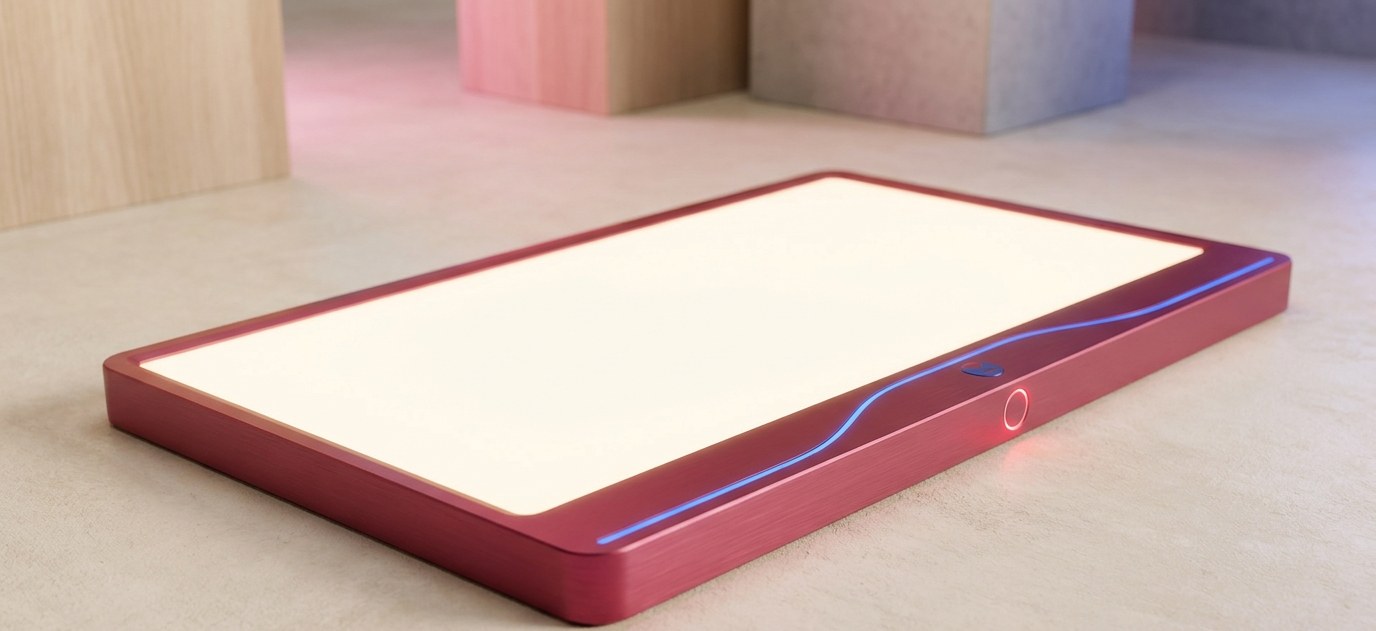
To sell a Smart LED Panel Light in Australia, you must mark it with the Regulatory Compliance Mark (RCM), which shows compliance with both the Electrical Equipment Safety System (EESS) for electrical safety and the ACMA scheme for electromagnetic compatibility. An Australian-based responsible supplier registers on the national EESS database, the luminaire is tested to AS/NZS 60598, and any Wi-Fi or voice-control feature adds ACMA radiocommunications obligations covered by a Supplier's Declaration of Conformity. This guide maps the certification path, the documents your Korean factory must hand over, and the energy-registration question to resolve before you ship.
If you make smart LED panel lights in Korea and want to sell into Australia, the hardest part is rarely the product — it is the paperwork and the order you do it in. Australian market access for lighting runs through one mandatory mark, two compliance schemes behind it, and a documentation trail that has to be ready before your goods reach the wharf. The sections below walk through the certification path, who can legally hold the supplier role, how the smart features change your obligations, the energy-efficiency question to settle, and the document pack you build at the factory.
Do Smart LED Panel Lights Need Certification to Sell in Australia?
Yes. According to the Electrical Equipment Safety System (EESS), in-scope electrical equipment must not be sold in Australia unless it is marked with the Regulatory Compliance Mark in compliance with AS/NZS 4417.1 and AS/NZS 4417.2 and the EESS. The RCM is a single mark that represents two things at once: compliance with the EESS electrical-safety scheme and compliance with the Australian Communications and Media Authority (ACMA) labelling requirements.
A smart LED panel light is a complete luminaire, so it sits squarely in scope. Standards Australia defines AS/NZS 60598.1 as the general safety standard for luminaires up to 1,000 V supply, including LED light sources, covering classification, marking, mechanical and electrical construction, and photobiological safety. A fixed general-purpose fitting such as a ceiling- or wall-mounted panel is additionally covered by AS/NZS 60598.2.1. In short, the RCM is not optional, and the AS/NZS 60598 family is the safety basis behind it.
The EESS Certification Path: From Factory to Approved RCM
The route from a finished panel in your factory to an approved RCM on the box follows a fixed order. The Responsible Supplier has to come first, because nothing can be registered or marked without one, and the mark itself comes last, because it represents that everything before it is in place.
The EESS sorts in-scope equipment into three risk levels, and the evidence behind the mark scales with risk. Per the EESS, Level 1 (low risk) requires the Responsible Supplier to hold evidence of compliance such as test reports; Level 2 (medium risk) additionally requires a Compliance Folder that must be made available to regulators within 14 days of request; and Level 3 (high risk) requires a valid Certificate of Conformity issued by a recognised certifier and listed on the national EESS Register. The exact level assigned to an LED panel light depends on the EESS in-scope equipment definitions, so confirm the product's level against those definitions rather than assuming it.
Two test streams — luminaire safety to AS/NZS 60598 and the EMC and radio evidence for the smart features — can usually run in parallel at an accredited laboratory, which shortens the timeline. Start the Responsible Supplier registration early so it is never the step holding up the shipment.
The EESS certification path for an LED panel light
- 1
Appoint and register the Responsible Supplier
An Australian or New Zealand importer registers on the national EESS database before the equipment can be legally supplied.
- 2
Test the luminaire to AS/NZS 60598
Safety testing to AS/NZS 60598.1 (general), plus AS/NZS 60598.2.1 for a fixed general-purpose fitting.
- 3
Address the smart-feature EMC and radio rules
Wi-Fi or voice control brings ACMA radiocommunications, EMC and EME obligations covered by an SDoC.
- 4
Match the model to its EESS risk level
Level 1 holds evidence; Level 2 keeps a Compliance Folder; Level 3 needs a Certificate of Conformity on the EESS Register.
- 5
Apply the RCM mark
Mark the product per AS/NZS 4417.1 and 4417.2 once the safety and EMC evidence is in place.
Who Does What: Korean Factory vs Australian Responsible Supplier
This is the point that catches the most exporters. Under the EESS, the Responsible Supplier must be the Australian or New Zealand manufacturer or the Australian or New Zealand importer of the equipment, and that entity must register as a Responsible Supplier on the national EESS registration database before the equipment can be legally supplied. The national database also lets buyers and regulators verify the legal supply of electrical equipment and trace it back to a supplier.
Your Korean factory cannot register itself as the Responsible Supplier from overseas. What the factory does is supply the compliance evidence — the safety and EMC test reports and the technical file — to an Australian or New Zealand importer or partner who then holds the supplier registration. If you sell on a delivered basis and want to control the brand, line up that Australian-based entity early, because without a registered Responsible Supplier the RCM cannot legally be applied at all.
Who does what under the EESS
| Your Korean factory | The Australian Responsible Supplier | |
|---|---|---|
| Core role | Manufactures the luminaire and supplies the compliance evidence | Places the product on the Australian market and is legally accountable |
| EESS registration | Cannot register as Responsible Supplier from overseas | Must register on the national EESS database before supply |
| Documents held | Test reports, technical specifications, declarations | Compliance Folder, supplier declaration, EESS registration record |
| The RCM mark | Builds the product to the marked standard | Is the entity whose compliance the RCM represents |
Smart Features: Wi-Fi, Voice Control, and the ACMA SDoC
The app and voice-control functions are where a smart panel picks up extra obligations. Per ACMA, products that include a wireless transmitter such as Wi-Fi or Bluetooth must comply with the relevant ACMA radiocommunications and electromagnetic compatibility (EMC) standards and electromagnetic energy (EME) requirements. These sit on top of the electrical-safety requirements that apply to every luminaire.
ACMA also requires the Responsible Supplier to complete and hold a Supplier's Declaration of Conformity (SDoC). The SDoC must be signed by the responsible supplier — the manufacturer or importer — whose street address and contact details are in Australia, and the supporting compliance records (test reports, the SDoC itself, and technical specifications) must be kept in a compliance folder. So the smart features do not just add a test; they add a declaration that an Australian-based party has to sign and stand behind.
Energy Efficiency: Does GEMS Registration Apply to Panel Lights?
Energy rules are evolving and need a careful read rather than an assumption. The GEMS Regulator states that LED lamps in scope of the Greenhouse and Energy Minimum Standards (LED Lamps) Determination 2025 must be registered in the GEMS Energy Rating Product Registration system. Entities cannot sell models covered by the determination from 3 March 2026 unless those models are registered with the GEMS Regulator or meet grandfathering provisions under the Greenhouse and Energy Minimum Standards Act 2012, and a test report is required for each model registered.
The open question is scope. The determination is written around "LED lamps", while an integrated LED panel light is a complete luminaire rather than a replaceable lamp. Whether an integrated panel falls inside or outside the determination depends on the exact definition used in the regulation, so confirm applicability directly with the GEMS Regulator before you rely on either answer. Treat GEMS as a question to resolve, not an assumption to make in either direction.
Resolve the GEMS scope question before you ship
GEMS LED Lamps Determination 2025 — confirm applicability
From 3 March 2026, models covered by the GEMS LED Lamps Determination 2025 cannot be sold in Australia unless registered with the GEMS Regulator or covered by grandfathering provisions, and a test report is required for each registered model. The determination is written around 'LED lamps', so whether an integrated LED panel luminaire is in scope must be confirmed directly with the GEMS Regulator before you rely on either answer.
The Document Pack Your Factory Must Hand Over
Pull the compliance evidence together at the factory so nothing stalls the shipment. The pack your Australian Responsible Supplier needs to hold centres on the test reports and declarations that sit behind the RCM, alongside the standard trade documents that travel with the goods. Keep the technical description on your commercial invoice consistent with the product described in the test reports — the item that clears customs must be the same item that carries the mark.
Pre-shipment document pack
- AS/NZS 60598 safety test reportPart 1 (general) plus AS/NZS 60598.2.1 for a fixed fitting
- EMC and radiocommunications evidence (smart models)Supports the ACMA SDoC for Wi-Fi or voice-control features
- Supplier's Declaration of Conformity (SDoC)Signed by the Australian-based Responsible Supplier
- EESS Responsible Supplier registration recordRegistered on the national database before supply
- Certificate of Conformity (if Level 3)Issued by a recognised certifier and listed on the EESS Register
- Technical specifications and the Compliance FolderLevel 2 must be produced for regulators within 14 days of request
- Standard trade documentsCommercial invoice, packing list, bill of lading or air waybill
How Long Certification Takes and What to Sequence First
There is no single fixed turnaround, because it depends on the risk level and the testing queue, but the sequencing is what you can control. Register the Responsible Supplier first so it never sits on the critical path. Run the AS/NZS 60598 safety testing and the smart-feature EMC and radio testing in parallel. If the model is Level 2, make sure the Compliance Folder is complete and can be produced for regulators within 14 days of any request; if it is Level 3, build in time for a recognised certifier to issue the Certificate of Conformity and for the model to be listed on the EESS Register. Settle the GEMS scope question in parallel with all of this, since it can affect whether an extra registration and test report are needed before 3 March 2026.
Frequently Asked Questions
The questions below are the ones importers and sourcing managers raise most often when they first plan an Australian launch for smart LED panel lights.
What certifications and marks does a Smart LED Panel Light need before it can be sold in Australia?
According to the EESS, in-scope electrical equipment such as an LED luminaire must not be sold in Australia unless it is marked with the Regulatory Compliance Mark (RCM) in compliance with AS/NZS 4417.1, AS/NZS 4417.2 and the EESS. Behind that mark you need safety evidence to AS/NZS 60598 and, for wireless models, ACMA electromagnetic compatibility and radiocommunications evidence.
Who is the "responsible supplier" under the EESS — does my Korean factory register, or my Australian importer?
Under the EESS, the Responsible Supplier must be the Australian or New Zealand manufacturer or importer, and that entity must register on the national EESS database before the equipment can be legally supplied. A Korean factory supplies the compliance evidence, but it cannot hold the supplier registration from overseas, so an Australian-based importer normally takes that role.
Does the Wi-Fi or voice-control function trigger extra ACMA requirements?
Yes. Per ACMA, products that include a wireless transmitter such as Wi-Fi or Bluetooth must comply with the relevant radiocommunications, electromagnetic compatibility (EMC) and electromagnetic energy (EME) standards, and the Responsible Supplier must complete and hold a Supplier's Declaration of Conformity (SDoC) signed by an Australian-based supplier with an Australian address.
Do LED panel lights need GEMS energy registration, and what is the 3 March 2026 deadline?
The GEMS Regulator states that LED lamps in scope of the Greenhouse and Energy Minimum Standards (LED Lamps) Determination 2025 cannot be sold from 3 March 2026 unless registered or grandfathered, with a test report required per model. Whether an integrated panel luminaire is in scope is not settled, so confirm applicability with the GEMS Regulator before you treat it as required or exempt.
What evidence does each EESS risk level need?
Per the EESS, in-scope equipment is sorted into three risk levels. Level 1 (low risk) requires the Responsible Supplier to hold evidence of compliance such as test reports; Level 2 (medium risk) additionally requires a Compliance Folder made available to regulators within 14 days of request; and Level 3 (high risk) requires a valid Certificate of Conformity issued by a recognised certifier and listed on the national EESS Register.
Talk to Us Before You Ship
Australian market access for smart LED panel lights comes down to one mark, two compliance schemes, and a document pack that has to be ready before the goods move. Register the Responsible Supplier, test to AS/NZS 60598 and the ACMA EMC and radio rules in parallel, settle the GEMS scope question with the regulator, and keep your trade paperwork aligned with your compliance file.
As a Korean trade platform, we help exporters of smart LED panel lights line up the right Australian Responsible Supplier, package the safety and EMC test evidence into a clean compliance file, and connect with vetted importers and distributors.
Sources
- Electrical Equipment Safety System (EESS) — Regulatory Compliance Mark (RCM): eess.gov.au/rcm
- Electrical Equipment Safety System (EESS) — Registration of in-scope equipment (risk levels): eess.gov.au/registration
- Electrical Equipment Safety System (EESS) — National registration database: eess.gov.au/registration/eess-registration-database
- Australian Communications and Media Authority (ACMA) — Show your product complies (SDoC): acma.gov.au
- Standards Australia — AS/NZS 60598.1 Luminaires (general requirements): store.standards.org.au
- GEMS Regulator / Energy Rating — Register LED lamps to sell them in Australia: energyrating.gov.au
This information is provided for reference and general guidance only. Australian standards, EESS risk classifications, ACMA obligations, GEMS scope, and customs requirements change over time — always confirm the current regulatory obligations with the EESS, ACMA, the GEMS Regulator, and a licensed customs broker or qualified compliance professional before you act.