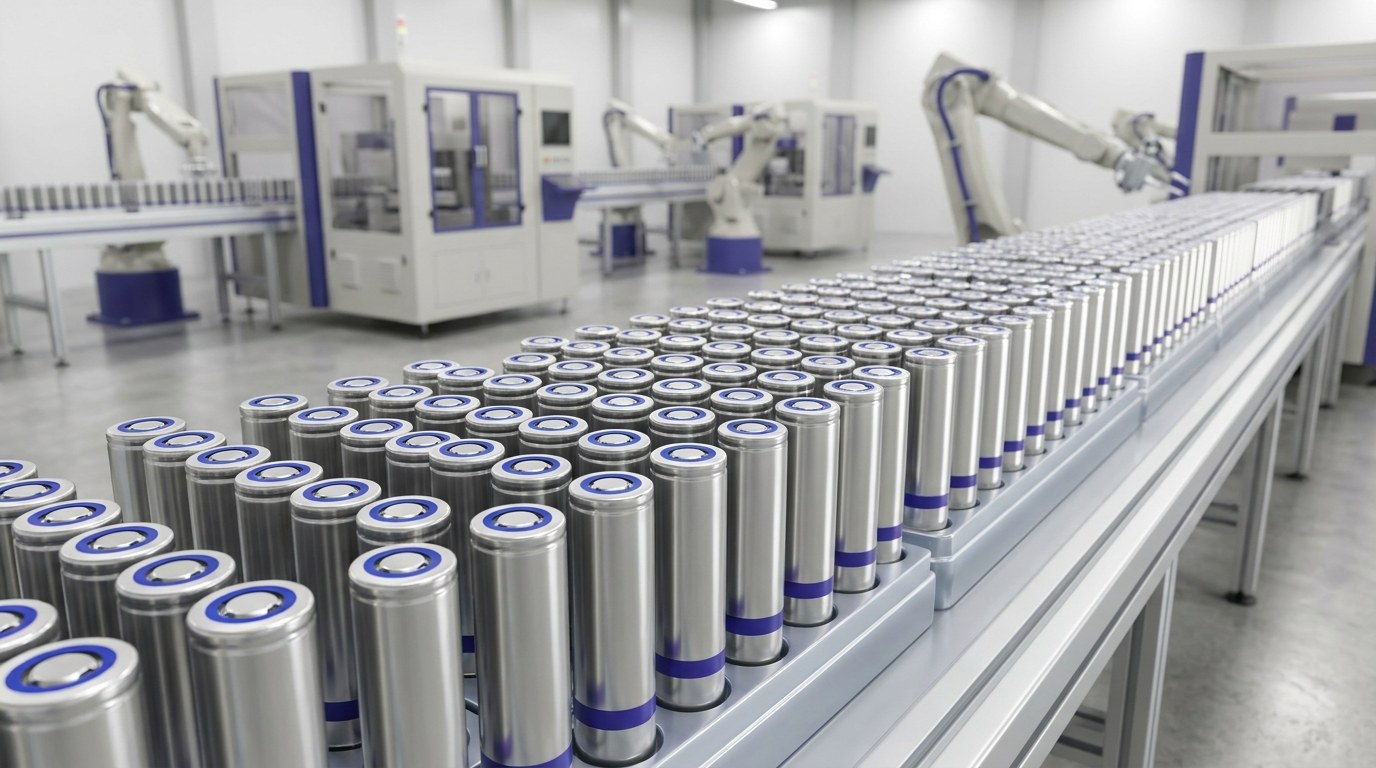
To place Korean lithium-ion battery cells on the EU market, the supply chain has to clear one regulation — Regulation (EU) 2023/1542, the EU Batteries Regulation — plus the transport-safety rules that govern lithium-ion shipments. In practice that means the EU operator placing the battery on the market runs a conformity assessment, draws up an EU Declaration of Conformity, affixes the CE marking, and meets the labelling, QR-code, battery-passport and due-diligence rules on their phase-in dates — while the Korean cell maker supplies UN 38.3 transport documentation, IEC 62133-2 safety results, and the technical evidence underneath all of it. This guide walks the conformity path, the document package, and the phase-in timeline so an EU importer of 21700 NMC cells knows what to ask for and when each rule bites.
The Conformity Path: From the Korean Cell to EU Placing-on-Market
The EU Batteries Regulation replaced the old Batteries Directive. According to EUR-Lex, Regulation (EU) 2023/1542 entered into force on 17 August 2023 and has applied since 18 February 2024, with certain provisions phasing in on later dates; it repeals the previous Batteries Directive 2006/66/EC, with that repeal taking effect from 18 August 2025. So this is the live framework for any cell or pack heading to the EU.
The path from a Korean 21700 NMC cell to a battery lawfully placed on the EU market runs in a fixed order: test the cell to recognised standards, build the technical documentation from those results, run the conformity assessment and draw up the EU Declaration of Conformity, affix the CE marking and Annex VI label, then place the battery on the market. The Korean cell maker's job in that chain is evidence — it runs the tests and hands over a clean, current file. Whether CE marking lands on the cell, the module, or the finished pack depends on what is actually placed on the EU market as a battery, and that is a decision the EU operator makes with its own legal counsel.
Conformity path from the Korean cell to EU placing-on-market
- 1
Test the cell to recognised standards
Run UN 38.3 transport-safety tests and the IEC 62133-2:2017 portable-lithium safety standard at the Korean cell maker.
- 2
Build the technical documentation
Assemble the test results, design data and standards used into the file that supports the conformity claim.
- 3
Run conformity assessment and draw up the EU Declaration of Conformity
Per Regulation (EU) 2023/1542, Articles 17-20 and 38(3), the operator placing the battery on the market performs conformity assessment and draws up the EU Declaration of Conformity.
- 4
Affix CE marking and label the battery
Apply the CE marking and the Annex VI label, with QR code from 18 February 2027.
- 5
Importer places the battery on the EU market
The EU economic operator placing it on the market carries the legal responsibility, including battery-passport accuracy where it applies.
Which Standards Feed the EU Technical Documentation
Two standards do most of the technical work for a lithium-ion cell — one for transport, one for product safety in use.
According to Battery University, UN 38.3 is Chapter 38.3 of the United Nations Manual of Tests and Criteria. Passing its suite of tests — altitude simulation, thermal cycling, vibration, shock, external short circuit, impact or crush, overcharge and forced discharge — is mandatory for lithium-ion cells before they may be transported as dangerous goods, and since 2020 a Lithium Battery Test Summary documenting the results must be made available. This is a transport gate: without it, the cells cannot lawfully move.
According to the International Electrotechnical Commission (IEC), IEC 62133-2:2017 covers safety requirements for portable sealed secondary lithium cells and batteries and specifies tests for safe operation under intended use and reasonably foreseeable misuse; it is frequently referenced for type approval and as an input to conformity documentation. Your 21700 cells are stated to be UN 38.3 tested and IEC 62133 covered, so the EU technical file can be built on results you already hold.
The Document Package the Korean Cell Maker Hands the Importer
An EU importer evaluating your 21700 NMC cells expects a predictable set of documents. Getting them ready before the order ships is what keeps the shipment moving at the border.
According to Battery University, the UN 38.3 Lithium Battery Test Summary is mandatory and documents the eight-test series. According to GWP Group, lithium-ion batteries are Class 9 (miscellaneous) dangerous goods — UN3480 for cells shipped on their own and UN3481 for cells packed with equipment — and any lithium-ion battery to be shipped must be proven to meet each test of the UN Manual of Tests and Criteria, Part III, sub-section 38.3; air shipments follow the IATA Dangerous Goods Regulations, with standalone UN3480 cells shipped by air at a state of charge of no more than 30% of rated capacity. So the transport file is the UN 38.3 Test Summary, the UN3480 or UN3481 Class 9 classification, and a dangerous-goods declaration, with the air-freight state-of-charge limit planned for if the cells fly.
A safety data sheet (SDS) is worth a clear word, because it is commonly misunderstood. An SDS is commonly requested by carriers and importers for dangerous-goods handling and product stewardship, but it is not a statutory EU requirement for the battery itself. Treat it as a document your forwarder may ask for, not as a legal condition of placing the battery on the market.
For product conformity, the file adds the IEC 62133-2:2017 test report and the EU Declaration of Conformity with CE marking. The labelling data rounds it out, with the QR code added on its 2027 date covered below.
Document package from the Korean cell maker to the EU importer
- UN 38.3 Lithium Battery Test SummaryMandatory since 2020 for transport; documents the eight-test series for the 21700 NMC cell.
- UN3480 / UN3481 Class 9 classificationUN3480 for cells shipped on their own, UN3481 for cells packed with equipment.
- Dangerous-goods declarationRequired for Class 9 lithium-ion transport; air shipments follow the IATA Dangerous Goods Regulations.
- IEC 62133-2:2017 test reportSafety requirements for portable sealed lithium cells; feeds the EU technical documentation.
- EU Declaration of Conformity + CE markingDrawn up by the operator placing the battery on the market under Articles 17-20.
- Annex VI label data (and QR code from 18 Feb 2027)General label applies from 18 August 2026; QR code from 18 February 2027.
- Safety data sheet (if requested)Commonly requested by carriers and importers for handling; not a statutory EU battery requirement.
Carbon Footprint Declaration: Why the Date Is Not Fixed Yet
Buyers often ask whether the carbon footprint declaration already applies to their cells. The honest answer is that, for EV batteries, the obligation has not actually started — and getting this right matters, because several secondary sources quote a date that is not yet live.
According to EUR-Lex, Article 7(1) of Regulation (EU) 2023/1542 requires a carbon footprint declaration for EV batteries that "shall apply from 18 February 2025 or 12 months after the date of entry into force either of the delegated act or of the implementing act … whichever is the latest." Because the relevant delegated act (the methodology) and implementing act (the declaration format) for EV batteries had not been finalised as of late 2025, the effective start of the EV-battery carbon-footprint declaration is deferred to 12 months after those acts enter into force, rather than the nominal 18 February 2025 date.
The practical takeaway: do not build a launch plan around a fixed carbon-footprint date, and be cautious of blogs that state one. Track the delegated and implementing acts, and start the 12-month clock from the day they enter into force. Preparing the underlying carbon-accounting data early is sensible; treating the declaration as already enforceable is not.
Carbon footprint declaration: the start date is conditional
Do not treat the carbon footprint declaration as already in force
Per Article 7(1) of Regulation (EU) 2023/1542, the EV-battery carbon footprint declaration applies from 18 February 2025 or 12 months after the relevant delegated act and implementing act enter into force, whichever is the latest. Because those acts were not finalised as of late 2025, the effective start is deferred to 12 months after they enter into force. Track the acts; do not assume the obligation has begun.
Supply-Chain Due Diligence: Postponed to 2027
The due-diligence obligation is the other place where dates have moved, so it is worth stating precisely.
According to EUR-Lex, Regulation (EU) 2025/1561 amends the EU Batteries Regulation to postpone the battery supply-chain due-diligence obligations — responsible sourcing, processing and trading of cobalt, natural graphite, lithium and nickel — from their original application date of 18 August 2025 to 18 August 2027, and it moves the deadline for the Commission to publish due-diligence guidelines from 18 February 2025 to 26 July 2026. The amending Regulation entered into force on 30 July 2025. According to the Council of the European Union, this "stop-the-clock" law means rules originally due to apply from 18 August 2025 now apply from 18 August 2027, covering the responsible sourcing of cobalt, natural graphite, lithium and nickel used in battery manufacturing.
For a Korean cell maker using NMC chemistry, this is breathing room, not a cancellation. The four materials named — cobalt, natural graphite, lithium and nickel — are exactly the ones in your cells. Mapping the sourcing chain and gathering supplier records now means the policy and evidence are ready when the obligation applies on 18 August 2027, instead of being assembled under deadline pressure.
Recycled Content: A Later Phase, but on the Same Regulation
Recycled-content rules are further out, but importers planning long supply agreements ask about them. According to EUR-Lex, Article 8 of Regulation (EU) 2023/1542 sets minimum recycled-content shares for cobalt, lithium and nickel recovered from manufacturing or post-consumer waste in industrial, EV and SLI batteries, with a first phase applying from 18 August 2031 and increased targets from 18 August 2036. These dates are years away and depend on recovered-material content rather than transport or labelling, but they sit inside the same regulation, so a cell maker building a long EU relationship should know they exist.
Labelling, the QR Code, and the Battery Passport
Labelling is where the cell maker's data feeds directly into what the importer must put on the battery, and the dates are specific.
According to EUR-Lex, Article 13 of Regulation (EU) 2023/1542 phases in the marking rules: the separate-collection symbol marking applies from 18 August 2025 (Article 13(4)); the general label with the information in Part A of Annex VI applies from 18 August 2026 (Article 13(1)); and from 18 February 2027, all batteries shall be marked with a QR code as described in Part C of Annex VI (Article 13(6)). These are the hard dates to design labelling artwork around.
The QR code is also the gateway to the battery passport. According to EUR-Lex, from 18 February 2027 batteries for light means of transport, industrial batteries with a capacity greater than 2 kWh, and electric-vehicle batteries placed on the EU market must each have a digital battery passport accessible via the QR code, and the economic operator placing the battery on the market is responsible for ensuring the passport is accurate, up to date and complete. For your 21700 cells, whether the passport applies turns on the finished battery: an industrial battery over 2 kWh or an EV battery assembled from the cells falls in scope, and the EU operator that places it on the market owns the passport's accuracy.
Who Is the Economic Operator Placing the Battery on the Market
A recurring question from non-EU makers is who actually carries the obligations. The answer follows the "placing on the market" idea built into the Regulation.
A Korean cell maker is outside the EU, so it does not place the battery on the EU market itself. The party that does — typically the EU importer or pack assembler — is an economic operator placing the battery on the market and carries those obligations, including battery-passport accuracy where it applies. The maker can alternatively appoint an EU-based party to take that role, but either way the duties sit with whoever places the battery on the EU market, and the Korean maker's contribution is the same: supply the UN 38.3 documentation, IEC 62133-2 results and technical evidence so the EU operator can complete conformity assessment and the Declaration of Conformity.
Who carries the placing-on-market obligations
Is the Korean cell maker established in the EU?
- No, the maker is outside the EU and sells through an EU importerThe EU importer is an economic operator placing the battery on the market and carries those obligations, including battery-passport accuracy where it applies.
- The maker wants to keep market-facing controlIt can appoint an EU-based party to act as the placing-on-market operator; the duties still sit with whoever places the battery on the EU market.
- Either routeThe Korean maker supplies the underlying evidence — UN 38.3, IEC 62133-2, technical documentation — so the EU operator can complete conformity and the declaration.
The Phase-In Timeline: Which Obligations Apply When
Because these rules phase in on different dates, the most useful thing for an importer is one ordered timeline: the Regulation applies generally since 18 February 2024; the separate-collection symbol from 18 August 2025; the general Annex VI label from 18 August 2026; the QR code and battery passport from 18 February 2027; due diligence, after its postponement, from 18 August 2027; and recycled-content minimums from 18 August 2031. The EV-battery carbon footprint declaration is the one date that is not fixed — it is conditional on the delegated and implementing acts and starts 12 months after they enter into force.
Read together, the early load on a Korean cell maker is the transport and product-safety file plus accurate label data; the 2027 items (QR code, passport, due diligence) need preparation now but sit with the EU operator at the point of placing on the market.
EU Batteries Regulation phase-in dates that affect the cell maker
| Obligation | Application date | |
|---|---|---|
| Regulation (EU) 2023/1542 generally applies | Applies | 18 February 2024 |
| Separate-collection symbol marking (Art. 13(4)) | Applies | 18 August 2025 |
| General label, Annex VI Part A (Art. 13(1)) | Applies | 18 August 2026 |
| QR code on all batteries (Art. 13(6)) and battery passport (Art. 77-79) | Applies | 18 February 2027 |
| Supply-chain due diligence (postponed by Reg. 2025/1561) | Applies | 18 August 2027 |
| Recycled-content minimum shares (Art. 8), first phase | Applies | 18 August 2031 |
| EV-battery carbon footprint declaration (Art. 7) | Conditional | 12 months after the delegated and implementing acts enter into force |
Last updated: 2026-06. This guide is for general information only. EU battery and transport rules change, several obligations phase in on future dates, and some depend on delegated or implementing acts that were not yet in force when this was written. Confirm current requirements with EUR-Lex, the European Commission, a notified body, your testing laboratory, and a qualified customs or regulatory professional before you ship.
Frequently Asked Questions
- What exact documents does a Korean cell maker hand its EU importer to place 21700 NMC cells on the EU market?
- The transport file plus the conformity evidence. For transport, according to Battery University and GWP Group: the UN 38.3 Lithium Battery Test Summary (mandatory since 2020), the UN3480 or UN3481 Class 9 classification, and a dangerous-goods declaration, with air shipments following the IATA Dangerous Goods Regulations. For conformity: the IEC 62133-2:2017 test report, the technical documentation, and the EU Declaration of Conformity with CE marking drawn up by the operator placing the battery on the market. A safety data sheet is commonly requested by carriers and importers but is not a statutory EU requirement for the battery.
- Do we need CE marking and an EU Declaration of Conformity on the cell, or only on the finished pack?
- CE marking and the EU Declaration of Conformity attach to what is actually placed on the EU market as a battery. According to EUR-Lex, under Regulation (EU) 2023/1542 (Articles 17-20 and 38(3)) the operator placing the battery on the market runs the conformity assessment and draws up the Declaration of Conformity. Whether that is the cell, a module, or the finished pack depends on the product and the operator's legal position, so the EU importer or assembler decides this with its own counsel; the Korean cell maker supplies the evidence underneath it.
- When does the EU battery passport become mandatory, and who is responsible for keeping it accurate?
- From 18 February 2027. According to EUR-Lex, from that date batteries for light means of transport, industrial batteries over 2 kWh, and EV batteries placed on the EU market must each have a digital battery passport accessible via the QR code, and the economic operator placing the battery on the market is responsible for ensuring it is accurate, up to date and complete. For 21700 cells, scope turns on the finished battery — an industrial battery over 2 kWh or an EV battery is covered.
- Is the carbon footprint declaration already enforceable for our batteries?
- Not yet, for EV batteries. According to EUR-Lex, Article 7(1) makes the EV-battery declaration apply from 18 February 2025 or 12 months after the relevant delegated and implementing acts enter into force, whichever is the latest. Because those acts were not finalised as of late 2025, the effective start is deferred to 12 months after they enter into force. Prepare the carbon-accounting data, but do not treat the declaration as already in force or build a plan around the nominal 2025 date.
- Has the supply-chain due-diligence requirement really been pushed to 2027?
- Yes. According to EUR-Lex and the Council of the European Union, Regulation (EU) 2025/1561 — a "stop-the-clock" amendment — postponed the due-diligence obligations for responsible sourcing of cobalt, natural graphite, lithium and nickel from 18 August 2025 to 18 August 2027, and moved the Commission's guidelines deadline to 26 July 2026. Use the extra time to map your NMC sourcing chain and gather supplier records so the evidence is ready when the rule applies in 2027.
This information is provided for reference. Always confirm current requirements with EUR-Lex, the European Commission, a notified body, your testing laboratory, and qualified customs or regulatory experts before you ship.
References
- EUR-Lex — Regulation (EU) 2023/1542 (EU Batteries Regulation: conformity, labelling, QR code, battery passport, carbon footprint, due diligence, recycled content)
- EUR-Lex — Regulation (EU) 2025/1561 (stop-the-clock amendment postponing battery due-diligence obligations to 18 August 2027)
- Council of the European Union — "stop-the-clock" on battery due-diligence rules (responsible sourcing of cobalt, natural graphite, lithium, nickel)
- Battery University — UN 38.3 testing and the Lithium Battery Test Summary (transport gate)
- International Electrotechnical Commission (IEC) — IEC 62133-2:2017 (safety of portable sealed secondary lithium cells and batteries)
- GWP Group — lithium-ion batteries as Class 9 dangerous goods (UN3480 / UN3481) and UN 38.3 shipping requirements