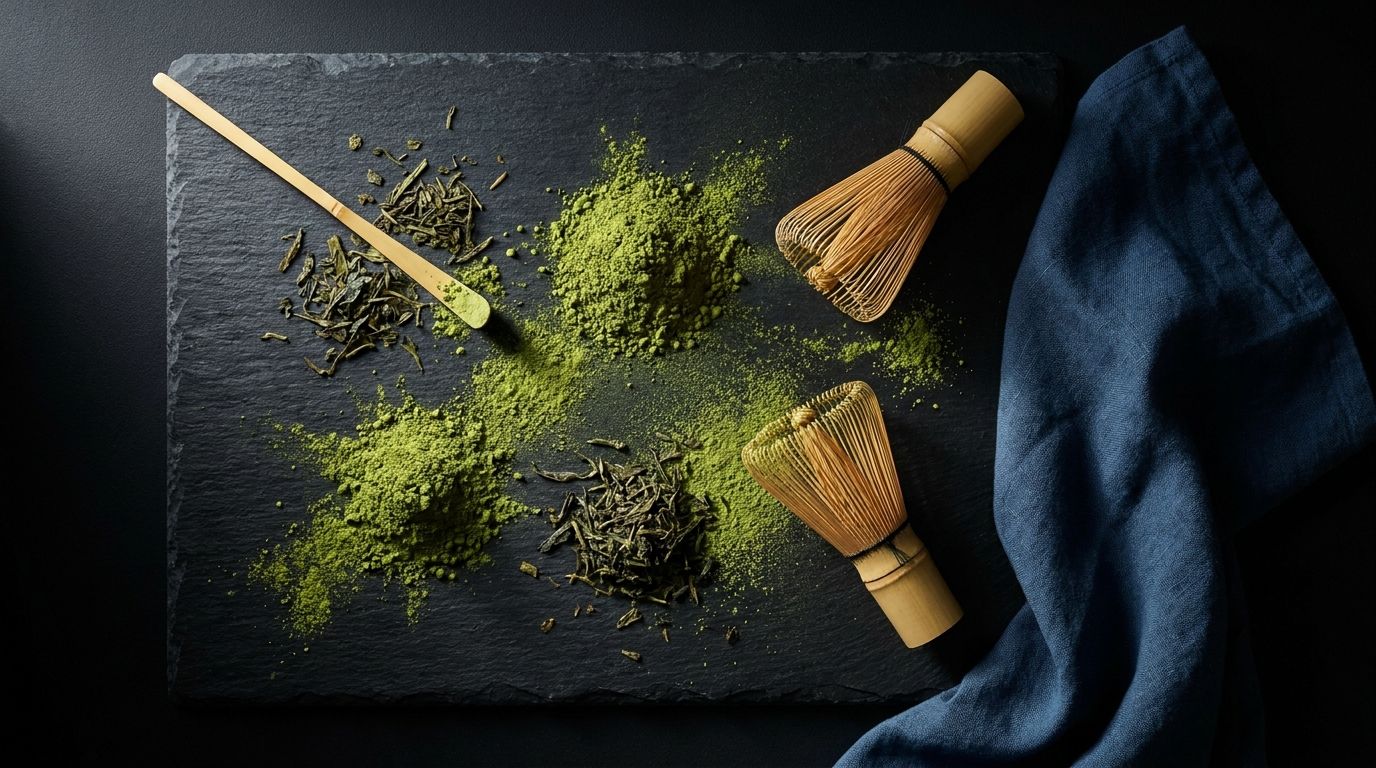
Korean organic green tea powder is one of the smoother food products to land at a U.S. port, but the same paperwork errors stop shipments year after year. Most refusals trace back to seven mistakes — late Prior Notice, an unqualified "organic" claim, missing FSVP records, the wrong labeling panel, pesticide residues, the wrong HS code, and a lapsed facility registration. Each one has a documented fix in U.S. law, and this guide walks through it.
The Stakes: Why a Single Paperwork Error Can Cost a Container
A held container accrues demurrage daily, and any product flagged as adulterated or misbranded can be refused entry — leaving the shipment to be re-exported, destroyed, or, in repeat cases, placed on automatic detention.
According to the U.S. Food and Drug Administration (FDA), the FY 2023 Pesticide Residue Monitoring Program analyzed 3,577 samples — 1,003 domestic and 2,574 imports from 84 countries and economies. Only 86.5% of import samples were compliant, compared with 97.2% of domestic samples — roughly one in seven imported food samples did not meet U.S. pesticide rules. Tea, a processed agricultural product, sits inside that risk band.
The seven mistakes below are ranked by how often they derail a shipment of Korean green tea powder, each with the regulation, the port consequence, and the fix.
One paperwork error can cost a container
A held container accrues demurrage daily, and product flagged as adulterated or misbranded can be refused entry — re-exported, destroyed, or placed on automatic detention. In FDA's FY2023 monitoring only 86.5% of import samples were compliant vs 97.2% domestic — roughly one in seven imported samples failed.
Mistake 1: Filing an Incomplete or Late FDA Prior Notice
What goes wrong. The U.S. importer or broker submits Prior Notice too close to vessel arrival, or with a wrong HS code, manufacturer registration number, or country of production.
Consequence. Per the FDA, Prior Notice cannot be amended once confirmed — any change requires a new one. A late or wrong filing means the shipment may be held at the port as untimely, and the broker has to refile and wait again.
Fix. Per 21 CFR 1.279(a), Prior Notice must be submitted and confirmed no fewer than 2 hours before arrival by land road, 4 hours by land rail, 4 hours by air, and 8 hours by water. For an ocean container, the 8-hour window is the planning anchor. Per the FDA, file electronically through the Prior Notice System Interface (PNSI) or the joint FDA/CBP entry process. Lock the manufacturer registration number, HS subheading, and country of production into a checklist the broker reuses on every shipment.
Mistake 2: Labeling the Product "Organic" Without USDA NOP Recognition
What goes wrong. A Korean tea farm holding a Korean organic certificate prints "USDA Organic" — or just "Organic" — on the U.S. retail pouch without checking the U.S.–Korea Organic Equivalence Arrangement terms.
Consequence. The product is misbranded under U.S. law. At the port, that is grounds for refusal; on store shelves, it is grounds for a recall.
Fix. Per the U.S. Department of Agriculture — Agricultural Marketing Service (USDA AMS), the arrangement took effect on July 1, 2014. Two conditions matter most for green tea powder: eligible products must be at least 95% organic content (so "Made With Organic" products are not covered), and products certified to Korean organic regulations must have had final processing in Korea. USDA AMS also notes the arrangement covers only processed products — raw agricultural commodities such as fresh leaves are not covered and need separate certification. The shipment should travel with an NOP Import Certificate generated in USDA's Organic Integrity Database.
Mistake 3: Skipping FSVP — and Leaving the U.S. Importer With No Record
What goes wrong. The exporter and importer assume FSVP is "the supplier's job" and never assemble a complete file at the importer's end.
Consequence. FSVP is enforced on the U.S. side. If FDA asks the importer for FSVP records and they are missing, the importer faces FSVP-specific compliance action, and the supplier risks losing the customer.
Fix. Per the FDA, under FSMA's Foreign Supplier Verification Programs rule, the FSVP importer is the U.S. owner or consignee at U.S. entry — or, if none, the U.S. agent of the foreign owner with a signed statement of consent. The U.S. importer, not the foreign supplier, is legally responsible for developing, maintaining, and following an FSVP for each food and each foreign supplier. The FDA requires reevaluation every three years (or sooner on new hazard information), and a separate FSVP for each food–supplier pair. The Korean exporter cannot file FSVP for the importer, but supplying a clean hazard analysis, lab results, certificates, and HACCP records makes the importer's FSVP file fast to assemble.
Mistake 4: Using the Wrong Label Panel — Nutrition Facts vs. Supplement Facts
Pick one positioning per SKU — Nutrition Facts vs. Supplement Facts
| Nutrition Facts | Supplement Facts | |
|---|---|---|
| Regulation | 21 CFR 101.9 | 21 CFR 101.36 |
| Positioning | Conventional food (culinary / beverage ingredient) | Dietary supplement |
| Key required fields | Standard Nutrition Facts panel | Serving size, servings/container, ingredient names & amounts, "Daily Value Not Established" footnote |
| Wrong panel | Misbranding → port detention | Misbranding → port detention |
What goes wrong. A 100 g retail pouch positioned as a beverage ingredient carries a "Nutrition Facts" panel when it should carry a "Supplement Facts" panel — or the reverse — and required fields are missing.
Consequence. Per the FDA, mis-selecting the panel or omitting required fields is a misbranding violation that can trigger detention at the port.
Fix. Per 21 CFR 101.36, a dietary supplement requires a "Supplement Facts" panel with serving size, servings per container, names and quantities of dietary ingredients, and a "Daily Value Not Established" footnote symbol for ingredients without a Daily Value. Per 21 CFR 101.9, conventional foods use a "Nutrition Facts" panel. A pouch sold as a culinary or beverage ingredient is usually a conventional food; a pouch sold as a dietary supplement uses Supplement Facts. Pick one positioning per SKU and confirm the panel with FDA labeling counsel before artwork is finalized.
Mistake 5: Pesticide or Heavy-Metal Residues That Trigger Border Testing
What goes wrong. A pesticide that is legal in Korea but has no U.S. tolerance is used on the leaf, or stored tea picks up trace contaminants in a non-segregated warehouse.
Consequence. Per the FDA, FDA may place a product, manufacturer, shipper, or country/area on an Import Alert for Detention Without Physical Examination (DWPE). Subsequent shipments are detained and refused at the port unless the importer rebuts the appearance of the violation with evidence such as third-party lab results. For tea specifically, Import Alert 99-08 is the principal FDA mechanism — inclusion can place a manufacturer's shipments on automatic detention until the firm petitions for removal with five consecutive compliant entries.
Fix. Match the U.S. rule, not the Korean one. Per the U.S. Government eCFR (40 CFR Part 180, EPA regulation, FDA-enforced for imports), EPA sets maximum pesticide residue tolerances under Part 180. When no U.S. tolerance exists for a given pesticide-on-commodity pair, any detectable residue is a violation — even at levels deemed safe in the origin country. Before each season, cross-check every pesticide used on the leaf against 40 CFR Part 180, drop any with no U.S. tolerance for tea, and lock the approved list into the farm's spray records. Run a U.S. accredited third-party lab test on each export lot for pesticide residues and heavy metals (lead), and keep the certificate of analysis in the shipment file.
Mistake 6: Misclassifying Green Tea Powder Under the Wrong HTS Code
HTS classification — classify by recipe, not marketing name
Per CBP CROSS Ruling N340633, classify by composition:
- 100% pure green tea (not fermented)HTSUS 0902.20.90 — duty Free
- Blended (sugar, creamer, milk powder, flavoring)HTSUS 2101.20 — 8.5% ad valorem (up to +30.5¢/kg)
- Any new blended SKUFile a CBP ruling request before the first shipment
What goes wrong. A 100% green tea powder is filed as a "preparation of tea" (HTSUS heading 2101.20), or a flavored matcha latte mix is filed as pure green tea (heading 0902) — usually as a copy-paste from a prior entry.
Consequence. A misclassification can mean either an overpaid duty for years or a CBP duty adjustment with penalties on retroactive entries.
Fix. Classify by recipe, not by marketing name. Per U.S. Customs and Border Protection (CBP) CROSS Ruling N340633 (Dried Matcha Latte Mixes from Japan), pure green tea (not fermented) is classified under HTSUS subheading 0902.20.90 with a general (column 1) duty rate of Free. Matcha-based mixed preparations — for example, latte mixes containing sugar or non-dairy creamer — are classified under heading 2101.20; example rulings carry 8.5% ad valorem and, depending on composition, up to 30.5 cents per kilogram plus 8.5% ad valorem. So 100% Jeju green tea powder lives at 0902.20.90 at Free duty; the moment milk powder, sweetener, or flavoring is added, the SKU moves to 2101.20 and pays duty. File a CBP ruling request before the first shipment of any new blended SKU.
Mistake 7: Letting the Biennial FDA Food Facility Registration Lapse
What goes wrong. The renewal window is missed because it comes around only once every two years.
Consequence. An expired Food Facility Registration (FFR) leaves the Korean processing site unable to legally ship food for U.S. consumption — Prior Notice filings tied to that facility may not clear.
Fix. Per the FDA, FSMA requires food facilities to renew their FFR biennially, between October 1 and December 31 of every even-numbered year. Foreign facilities engaged in manufacturing, processing, packing, or holding food for U.S. consumption must register. Registration and renewal are free, but a Unique Facility Identifier (currently the DUNS number) is required. Calendar a reminder for September 15 of every even-numbered year so the window opens with two weeks of buffer, confirm the U.S. agent is still active, and verify the DUNS number before submitting.
How an Export-Ready Supplier Avoids These Seven Mistakes
Most of this guide describes rules every Korean tea exporter has to meet on their own. Where a supplier makes the U.S. entry smoother is in being export-ready: a HACCP-certified facility, a Korean organic certificate that qualifies for the U.S.–Korea equivalence arrangement, lab tests aligned to EPA pesticide tolerances and FDA lead guidance, and a label-ready specification sheet.
Ironwood Global's 100% Korean organic green tea powder is produced in a HACCP-certified facility on Jeju and carries Korean organic certification. As your trade partner, we line up the documentation set the seven fixes call for — Prior Notice inputs, FSVP-ready specs, the NOP Import Certificate workflow, an HTS classification basis, and a lab-tested certificate of analysis — so your importer can clear the seven traps without retro-engineering them at the port.
Last updated: 2026-05. This guide is for general information only. U.S. import rules change and can depend on your specific product and shipment. Confirm current requirements with the FDA, USDA, U.S. Customs and Border Protection, and a qualified customs, regulatory, or labeling professional before you ship.
Frequently Asked Questions
- Who is legally responsible for FSVP — the Korean exporter or the U.S. importer of record?
- The U.S. importer. Per the FDA, the FSVP importer is the U.S. owner or consignee of the food at U.S. entry — or, if none, the U.S. agent of the foreign owner with a signed statement of consent. The importer is responsible for developing, maintaining, and following an FSVP for each food and each foreign supplier, and must reevaluate every three years. The Korean exporter is the supplier being verified; supplying a complete hazard analysis, lab results, and certificates speeds the importer's FSVP file.
- How many hours before arrival must Prior Notice be filed for an ocean container of green tea powder?
- Per 21 CFR 1.279(a), Prior Notice must be submitted and confirmed no fewer than 8 hours before arrival by water. Per the FDA, Prior Notice cannot be amended once confirmed — any change requires a new submission filed through the Prior Notice System Interface (PNSI) or the joint FDA/CBP entry process.
- Is our Korean organic certification enough to print "Organic" on a U.S. retail pouch?
- For a processed Korean organic product, qualifying Korean certification can be recognized under the U.S.–Korea Organic Equivalence Arrangement. Per USDA AMS, the arrangement took effect on July 1, 2014; eligible products must be at least 95% organic content (so "Made With Organic" products are not covered), and products certified to Korean organic regulations must have had final processing in Korea. The product must be certified by a Korean-accredited certifier and travel with an NOP Import Certificate from USDA's Organic Integrity Database. Raw agricultural commodities are not covered.
- Is Korean green tea powder duty-free under HTS 0902, and when does it become dutiable?
- Per CBP CROSS Ruling N340633, pure green tea (not fermented) is classified under HTSUS subheading 0902.20.90 with a general duty rate of Free. Once the powder is blended into a "preparation of tea" under heading 2101.20, the duty changes: example rulings on matcha-based mixed preparations carry 8.5% ad valorem and, depending on composition, up to 30.5 cents per kilogram plus 8.5% ad valorem. The line is the recipe, not the brand name.
- Does a 100 g pouch of green tea powder need a Nutrition Facts panel or a Supplement Facts panel?
- It depends on positioning. Per 21 CFR 101.36, a dietary supplement requires a "Supplement Facts" panel; per 21 CFR 101.9, conventional foods use a "Nutrition Facts" panel. A pouch sold as a culinary or beverage ingredient is usually a conventional food; a pouch sold as a dietary supplement uses Supplement Facts. Per the FDA, selecting the wrong panel is a misbranding violation that can trigger detention — confirm the positioning and panel with FDA labeling counsel before artwork is finalized.
This information is provided for reference. Always confirm current requirements with the FDA, USDA, U.S. Customs and Border Protection, and qualified customs, regulatory, or labeling experts before you ship.
References
- 21 CFR 1.279 — Prior Notice timing (Cornell LII mirror of eCFR)
- FDA — Filing Prior Notice of Imported Foods
- USDA AMS — U.S.–Korea Organic Equivalence Arrangement FAQ
- FDA — Foreign Supplier Verification Programs (FSVP) key requirements
- eCFR — 21 CFR 101.36 (Supplement Facts)
- FDA — FY 2023 Pesticide Residue Monitoring Report
- FDA — Import Alert 99-08 (DWPE for pesticide residues)
- eCFR — 40 CFR Part 180 (EPA pesticide tolerances)
- CBP CROSS Ruling N340633 — Dried Matcha Latte Mixes from Japan
- FDA — Registration of Food Facilities (biennial renewal)